🎉 Up to 70% Off Selected ItemsShop Sale

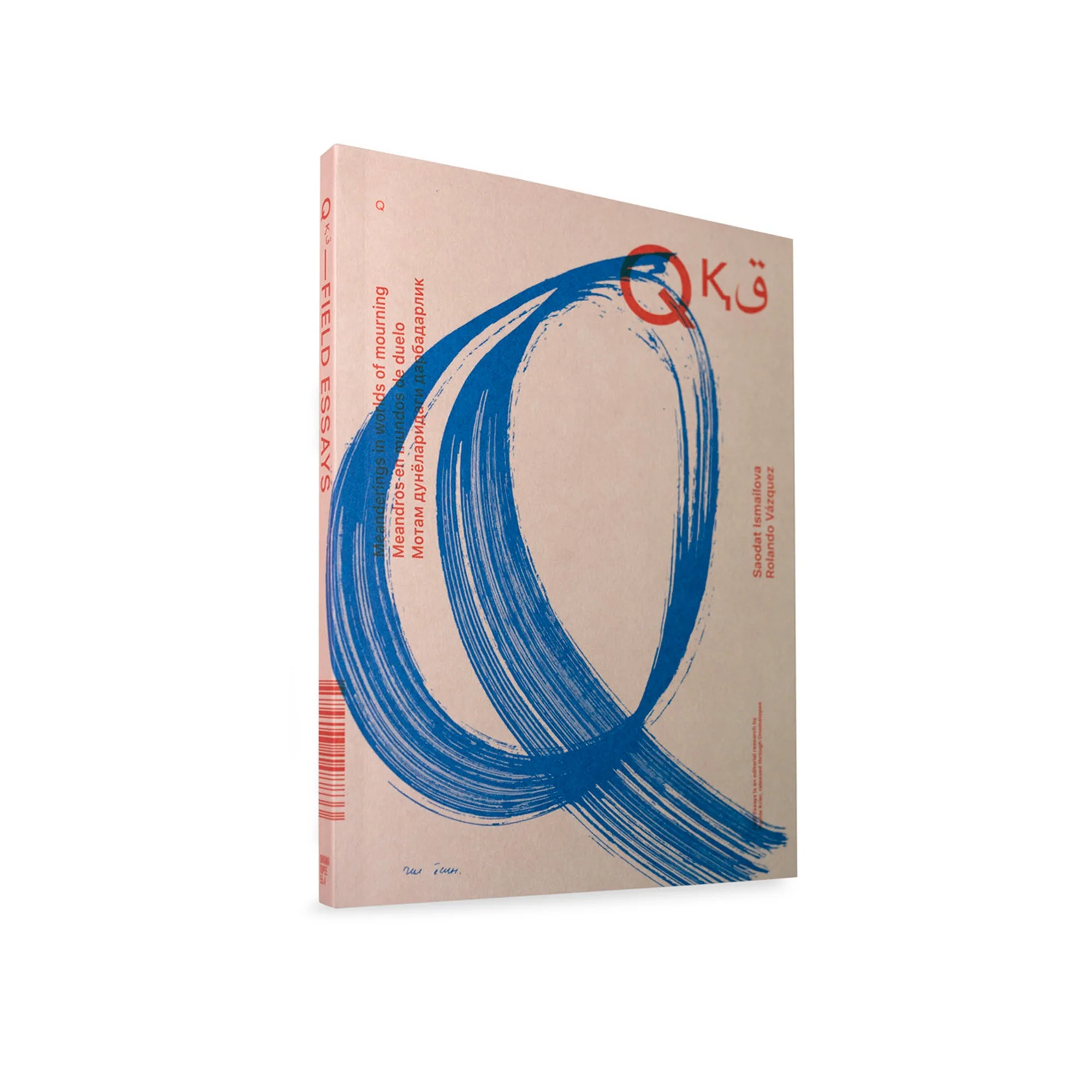
Field Essays #5: Q: Meanderings In Worlds Of Mourning - Softcover
- In the 5th issue, Field Essays brings together Uzbek artist and filmmaker Saodat Ismailova with decolonial scholar Rolando Vázquez
- While Ismailova came of age in the post-Soviet era of Central Asia, Vázquez carries within him the ancestral geographies of the Latin American continent — or Abya Yala as indigenous peoples call her
- The book sets out on a journey to find out what these differing cultures can learn from each other in terms of mourning and healing the triple colonial wound of timelessness, earthlessness and worldlessness (Vázquez: 2018). Can a book be a gesture of offering rather than a space of enunciation? Can it be a space of listening that can reconfigure inherited Western modes of thinking and working and create a space of “coming to voice” for silenced histories and life lines?
- The name given to this book and journey is “Q. Meanderings in worlds of mourning”. Q stands for the Uzbek word qyrq, number 40, which connects to many parts of Uzbek culture: 40 (+1) spirits, 40 hottest and coldest days, but also 40 girls, an ancestral matriarchal epos, and a 40 day silence retreat at transition moments in life (death, birth, mariage)
Pages: 128
Published: May 2022
Size (cm): 17 x 23.5
Every purchase supports ACMI.
- In the 5th issue, Field Essays brings together Uzbek artist and filmmaker Saodat Ismailova with decolonial scholar Rolando Vázquez
- While Ismailova came of age in the post-Soviet era of Central Asia, Vázquez carries within him the ancestral geographies of the Latin American continent — or Abya Yala as indigenous peoples call her
- The book sets out on a journey to find out what these differing cultures can learn from each other in terms of mourning and healing the triple colonial wound of timelessness, earthlessness and worldlessness (Vázquez: 2018). Can a book be a gesture of offering rather than a space of enunciation? Can it be a space of listening that can reconfigure inherited Western modes of thinking and working and create a space of “coming to voice” for silenced histories and life lines?
- The name given to this book and journey is “Q. Meanderings in worlds of mourning”. Q stands for the Uzbek word qyrq, number 40, which connects to many parts of Uzbek culture: 40 (+1) spirits, 40 hottest and coldest days, but also 40 girls, an ancestral matriarchal epos, and a 40 day silence retreat at transition moments in life (death, birth, mariage)
Pages: 128
Published: May 2022
Size (cm): 17 x 23.5
Every purchase supports ACMI.
$35.32
Field Essays #5: Q: Meanderings In Worlds Of Mourning - Softcover—
$35.32
Description
- In the 5th issue, Field Essays brings together Uzbek artist and filmmaker Saodat Ismailova with decolonial scholar Rolando Vázquez
- While Ismailova came of age in the post-Soviet era of Central Asia, Vázquez carries within him the ancestral geographies of the Latin American continent — or Abya Yala as indigenous peoples call her
- The book sets out on a journey to find out what these differing cultures can learn from each other in terms of mourning and healing the triple colonial wound of timelessness, earthlessness and worldlessness (Vázquez: 2018). Can a book be a gesture of offering rather than a space of enunciation? Can it be a space of listening that can reconfigure inherited Western modes of thinking and working and create a space of “coming to voice” for silenced histories and life lines?
- The name given to this book and journey is “Q. Meanderings in worlds of mourning”. Q stands for the Uzbek word qyrq, number 40, which connects to many parts of Uzbek culture: 40 (+1) spirits, 40 hottest and coldest days, but also 40 girls, an ancestral matriarchal epos, and a 40 day silence retreat at transition moments in life (death, birth, mariage)
Pages: 128
Published: May 2022
Size (cm): 17 x 23.5
Every purchase supports ACMI.